Most AI MVPs fail because the team builds a demo before defining the decision it should improve.
AI development services should help founders and SMEs define the workflow, data context, AI role, evaluation method, product UX, and launch model before investing in a full build.

Solvrz Team
Solvrz
Challenge
Founders and SMEs often begin AI product development with a model or prompt demo before the user workflow, data boundary, evaluation criteria, and launch path are clear.
Approach
Use a six-part product readiness framework covering workflow, data context, AI role, evaluation, UX, integration, and launch governance.
Outcome Focus
Create a clearer path from AI product idea to prototype, MVP, or production-ready workflow without overbuilding the wrong system.
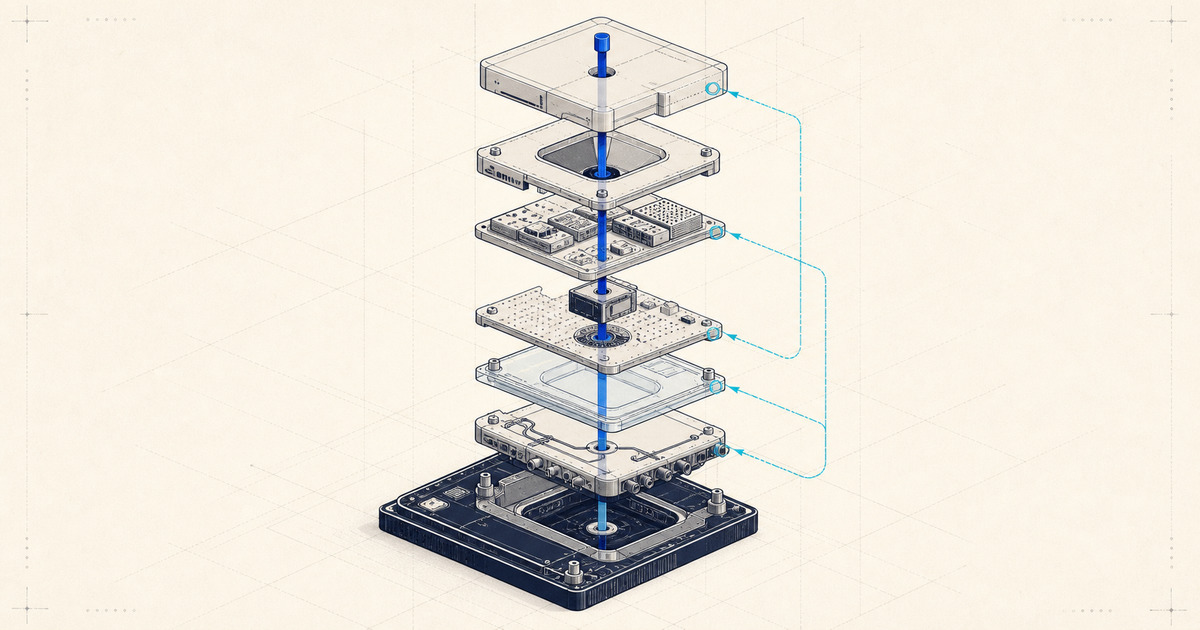
AI demos are easy to produce. AI products are harder to operate.
A founder can connect a model API, write a prompt, upload a few documents, and show something impressive in a day. That can be useful for learning, but it is not yet an AI product. A product needs users, workflow state, quality controls, permissions, analytics, recovery paths, and a reason to exist beyond the novelty of the model.
That is why serious AI development services should begin before code. The first job is not to ask which model is best. The first job is to define what the product should improve.
Attention: AI Product Development Starts With A Decision
Most AI products exist to improve a decision, handoff, or repeated task. The product might classify leads, extract evidence from documents, draft customer responses, route internal requests, summarise cases, or help an operator decide what to do next.
If the target decision is unclear, the MVP will drift. The team will keep adding features because no one can tell whether the AI system is doing the right job.
Before building, write one sentence:
This AI product helps [user] do [specific workflow] by improving [decision or output] using [data/context], with [review or control model].
For example:
This AI product helps an operations manager triage supplier documents by extracting required fields, flagging missing evidence, and routing exceptions for review.
That sentence is more useful than a feature list because it defines the product behaviour, user, context, and accountability model.
Interest: What AI Development Services Should Clarify
An AI development engagement should not only produce software. It should reduce uncertainty. The team should leave with clearer answers about the workflow, product architecture, data readiness, and quality model.
Use this readiness framework before building an AI product MVP.
1. User Workflow
Define the user and the moment of use. Is the product for a founder, operations team, support agent, compliance reviewer, analyst, or customer? What are they trying to complete? What happens before and after the AI output appears?
A weak AI product brief says:
Build an AI assistant for our business.
A stronger brief says:
Build an assistant that helps support operators summarise incoming tickets, suggest the next action, and escalate uncertain cases before response.
The second brief can be designed, tested, and measured.
2. Data And Context
AI product development depends on context. The system may need documents, customer records, prior tickets, product data, business rules, user permissions, or structured workflow state.
Before build, identify:
- Which data sources are required
- Which fields are reliable
- Which documents are inconsistent
- Which information is sensitive
- Which users can access each output
- Which data cannot leave the environment
If the product handles sensitive records, compliance evidence, or verification workflows, the architecture may need document AI, private data boundaries, or review logs. If data residency, latency, or control are central constraints, the team may need an edge AI or private AI infrastructure pattern.
3. AI Role
Define what AI should actually do. Common roles include:
- Classification
- Extraction
- Summarisation
- Drafting
- Routing
- Recommendation
- Anomaly detection
- Decision support
Avoid broad roles like "manage operations" or "automate compliance." Those are business outcomes, not product behaviours. A model cannot be evaluated against a vague role.
4. Evaluation
Evaluation is where many AI MVPs become serious or fall apart. If the team cannot tell whether an output is good, the product cannot be trusted.
Evaluation criteria might include:
- Accuracy of extracted fields
- Completeness of summaries
- Correctness of routing categories
- Reviewer correction rate
- Low-confidence exception rate
- Time saved per workflow stage
- User acceptance or rejection of suggestions
These metrics should shape the prototype. Do not wait until after launch to decide what "good" means.
5. Product UX
AI output needs an interface. Users need to see context, confidence, source references, edit controls, escalation paths, and history. If the product asks people to trust AI blindly, adoption will suffer.
For internal tools, UX should make review efficient. For customer-facing products, UX should make the AI system feel reliable, understandable, and easy to correct. For founder-led SaaS MVPs, UX should expose the core value quickly without pretending the product is more mature than it is.
6. Integration And Launch Governance
An AI product rarely stands alone. It needs to connect to existing tools, databases, documents, CRM systems, ticketing systems, dashboards, or notification flows.
It also needs ownership:
- Who monitors failures?
- Who reviews edge cases?
- Who updates prompts, rules, and evaluation criteria?
- Who approves access changes?
- What happens if the model output quality drops?
- What is the next milestone after MVP?
This is the difference between a demo and a product system.
Desire: Choose The Right Build Scope
Not every AI idea should become a full product immediately. The right scope depends on risk.
If the workflow is unclear, start with strategy or discovery through an AI services roadmap.
If the workflow is repetitive and operational, start with AI automation.
If the user, workflow, and product thesis are already clear, start with AI product development or an MVP build.
If the product touches sensitive records, compliance documents, or private business data, include architecture decisions early rather than treating privacy and governance as later technical details.
Action: Write The AI Product Brief Before The Build
Before starting AI development, create a one-page brief:
- User: who uses the product
- Workflow: what they are trying to complete
- Data: what context the system needs
- AI role: what the model should do
- Review: where human control is required
- Evaluation: how output quality will be measured
- Integration: which systems the product must connect to
- Launch: who owns monitoring and improvement
This brief does not slow down the build. It prevents the team from building the wrong thing quickly.
Solvrz helps founders, SMEs, and innovation teams turn AI product ideas into prototypes, MVPs, and launch-ready systems. The strongest AI product build starts with a decision worth improving, not a demo worth showing.
Evidence Snapshot
- A defined user workflow makes the AI role testable before engineering investment scales.
- Evaluation criteria should be selected before model or vendor decisions so output quality can be measured.
- Launch governance reduces the risk of shipping an AI product without ownership, review, monitoring, or improvement loops.
Connected Reading
Follow the related product path
Service page
AI development services
Plan the architecture, evaluation, and MVP build path for an AI product.
Service page
Generative AI development
Build LLM-powered products with prompt architecture, retrieval, evaluation, and production-quality delivery.
Engagement path
Build capabilities
Compare the discovery, engineering, AI, digital trust, launch, and governance lanes.
Keep reading
AI MVP Development Services: What To Build Before You Scale
AI MVP development services should turn an AI idea into a testable product build with workflow design, evaluation, review controls, and launch evidence.
RAG System Development: When Retrieval Beats A Generic Chatbot
RAG system development helps generative AI products answer from approved knowledge with retrieval, source grounding, evaluation, and review controls.