RAG system development is useful when an AI product must answer from approved business knowledge, not just general model memory.
Teams should choose RAG when source grounding, retrieval quality, permissions, and evaluation are part of the product requirement.

Solvrz Team
Solvrz
Challenge
Generic chatbots often fail business workflows because they cannot reliably retrieve approved context, expose evidence, or match workflow constraints.
Approach
Design the retrieval layer, chunk strategy, prompt rules, evaluation set, source grounding, and review model before scaling usage.
Outcome Focus
Create a generative AI product that can be tested against business knowledge and improved through retrieval and evaluation signals.
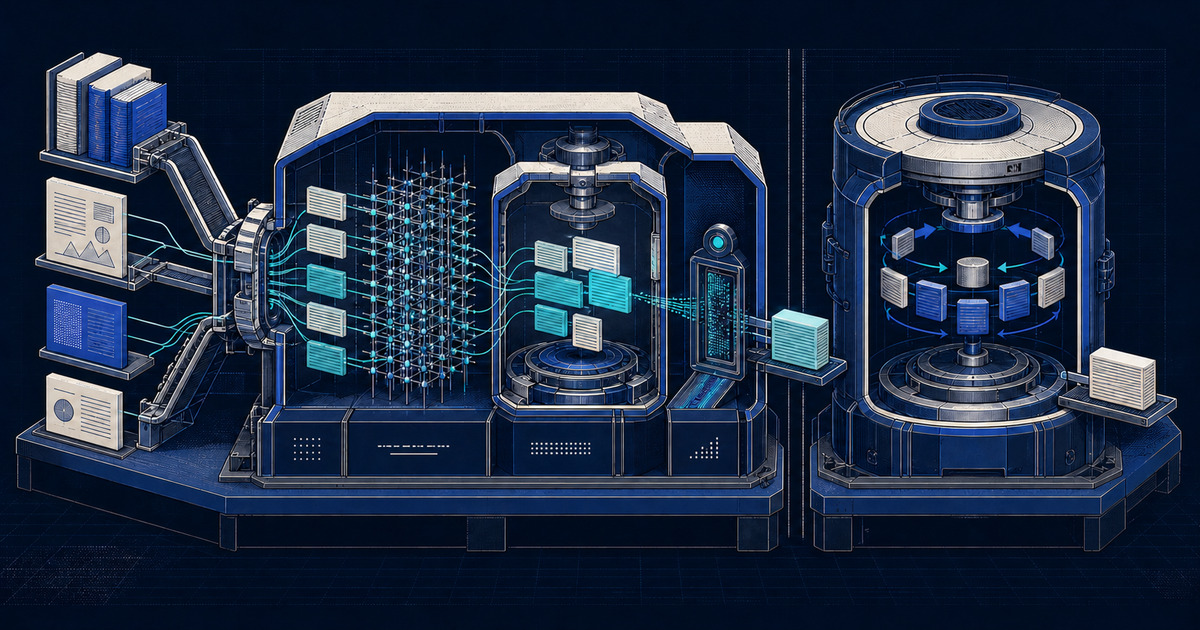
RAG system development matters when a generative AI product needs to answer from approved business knowledge. A generic chatbot may be enough for broad exploration. It is rarely enough for a product that needs source grounding, permissions, review, and measurable quality.
Solvrz treats RAG system development as system design. Retrieval, prompts, evaluation, UX, and governance all shape whether the product can be trusted in real workflows.
Challenge: Generic Chatbots Do Not Know Your Operating Context
Generic chatbots are useful for drafts, brainstorming, and broad questions. They are weaker when the answer must come from specific company knowledge: policies, support history, product documentation, contracts, compliance material, customer records, or internal playbooks.
The problem is not only hallucination. The problem is product fit. A business AI product often needs to show where an answer came from, respect permissions, avoid stale sources, route uncertainty to a person, and improve over time.
That is why RAG system development starts before the first prompt is finalised.
Approach: Design Retrieval Before Optimising Prompts
A retrieval-augmented generation system has several parts.
Knowledge sources
Define which documents, databases, or records are allowed. Mark ownership, sensitivity, update cadence, and permission rules.
Chunking and indexing
Prepare the knowledge so it can be retrieved reliably. Chunk size, metadata, document hierarchy, and embeddings all affect answer quality.
Query handling
The system may need query rewriting, filters, synonym handling, or routing by document type. Good retrieval depends on matching user intent to the right source material.
Prompt architecture
Prompts should tell the model how to use retrieved context, how to handle missing evidence, and when to refuse or escalate.
Evaluation
Evaluation should test whether the right sources were retrieved and whether the final answer stayed faithful to those sources.
Review and improvement
Users need a way to flag weak answers. Operators need to see failure patterns and improve sources, prompts, filters, or retrieval settings.
Outcome: Source-Grounded Answers With A Quality Loop
A useful RAG system should make answer quality measurable. The team should be able to inspect:
- Which sources were retrieved.
- Whether the answer matched the source.
- Whether the source was current and allowed.
- Whether the user accepted, edited, or rejected the answer.
- Which questions repeatedly failed.
This makes the product improvable. Without those signals, a chatbot can feel impressive while quietly failing the workflow.
Evidence: RAG Readiness Matrix
Use this readiness matrix before deciding whether to build a RAG system.
- Source quality: Documents are current, owned, and relevant to the task.
- Permissions: Users only retrieve knowledge they are allowed to see.
- Retrieval: Test questions return the right source chunks consistently.
- Prompt rules: The model knows when to answer, cite, refuse, or escalate.
- Evaluation: Retrieval and answer quality are tested before release.
- Review loop: Users and operators can report weak or risky answers.
RAG system development is not always necessary. If the task is deterministic, use rules. If the knowledge base is tiny, a simpler search flow may work. If the product depends on trusted answers from changing business content, RAG is usually the better starting point.
FAQ
What is RAG system development?
RAG system development designs the retrieval, context, prompt, evaluation, and application layers that allow an LLM product to answer from approved business knowledge.
When is RAG better than a generic chatbot?
RAG is better when answers need to be grounded in company documents, policies, product knowledge, support history, or other approved sources. It is also useful when source visibility and quality evaluation matter.
What should be measured in a RAG system?
A RAG system should measure retrieval quality, answer faithfulness, source freshness, user acceptance, correction rate, and repeated failure patterns.
Related
For product build support, see RAG system development. For workflow automation beyond language tasks, see AI automation sprint for enterprise workflows.
Evidence Snapshot
- RAG quality depends on retrieval design as much as prompt design.
- Evaluation should include retrieval quality, answer quality, source faithfulness, and user correction signals.
- Permissions and source freshness should be treated as product requirements, not infrastructure details.
Next Step
Turn the RAG idea into a buildable product path.
Solvrz can help scope the retrieval layer, evaluation loop, review model, and first usable workflow before your team commits to a larger generative AI build.
No confidential data needed for the first scoping conversation.
Connected Reading
Follow the related product path
Service page
AI development services
Plan the architecture, evaluation, and MVP build path for an AI product.
Service page
Generative AI development
Build LLM-powered products with prompt architecture, retrieval, evaluation, and production-quality delivery.
Engagement path
Build capabilities
Compare the discovery, engineering, AI, digital trust, launch, and governance lanes.
Keep reading
AI Development Services: What You Actually Need Before Building An AI Product
A practical framework for choosing AI development services before building an AI product, SaaS MVP, or custom AI workflow system.
How AI Document Verification Works — And What Actually Drives Accuracy
A plain explainer of how AI document verification works end to end — classification, extraction, validation, confidence scoring, and review — and the concrete factors that actually drive accuracy in automated document checking.