AI document verification is a pipeline, not a single model — and accuracy is decided by how you stage classification, extraction, validation, and confidence, not by the model alone.
If you want reliable automated document checking, design for the errors first: known document types, deterministic validation, and confidence thresholds that route uncertainty to a human.

Solvrz Team
Solvrz
Challenge
Buyers evaluating document verification using AI ask 'how accurate is it?' before they understand that accuracy depends on pipeline design, document quality, and where uncertainty is routed.
Approach
Explain the verification pipeline stage by stage, then map each stage to the specific factor that raises or lowers reliability, so accuracy becomes a design decision rather than a vendor promise.
Outcome Focus
Give evaluators a working mental model of how AI for document validation and verification behaves, so they can specify the accuracy, confidence thresholds, and review coverage their compliance context actually requires.
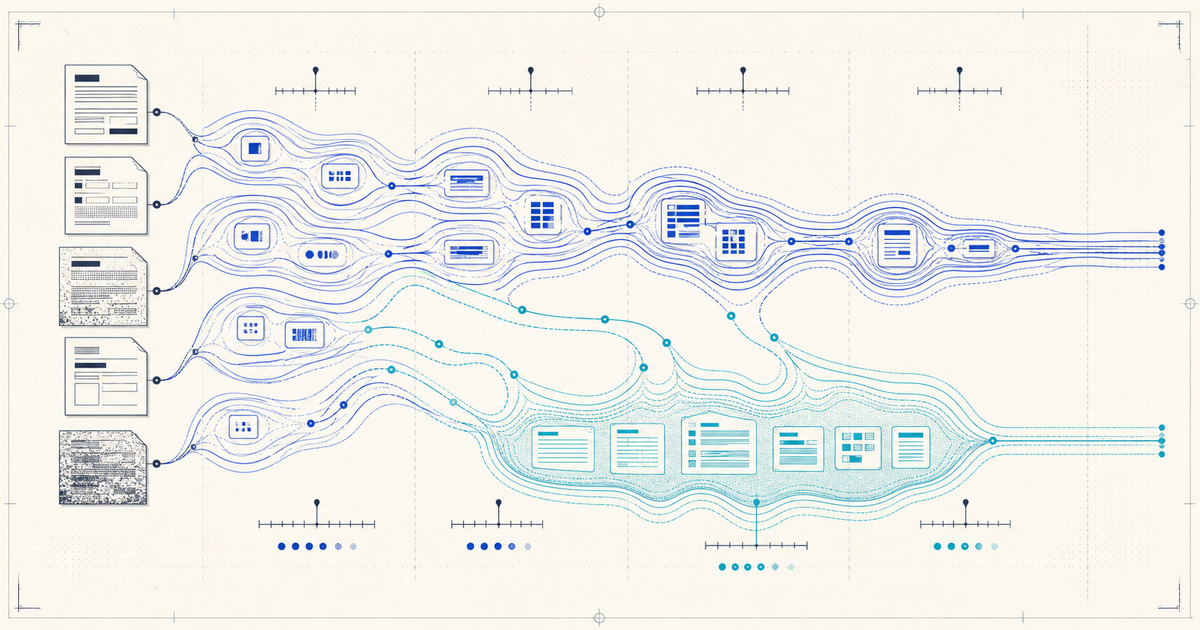
"How accurate is it?" is the first question every team asks about document verification using AI. It is also the wrong first question — not because accuracy does not matter, but because there is no single accuracy number. Accuracy is produced by a pipeline, and each stage of that pipeline can be measured, tuned, and controlled independently.
Solvrz builds AI document verification workflows as staged systems, not single model calls. This post explains how automated document checking actually works end to end, and then maps each stage to the concrete factor that raises or lowers reliability. The goal is to let you specify the accuracy your compliance context needs, rather than accept a vendor's headline figure.
Challenge: "Accuracy" Hides More Than It Reveals
A single accuracy percentage is easy to quote and hard to trust. It usually collapses several very different things into one number: did the system recognise the document type, did it read the right fields, did it read them correctly, and did it correctly flag the cases it was unsure about.
Those are separate questions, and they fail in separate ways. A system can classify documents almost perfectly and still misread a handwritten date. It can extract fields cleanly and still miss that a certificate has expired. Treating verification as one score means you cannot tell which failure you are actually exposed to — which is exactly the information a compliance or risk team needs.
Approach: Verification Is A Five-Stage Pipeline
Automated document checking is best understood as a sequence. Each stage narrows uncertainty, and each stage has its own accuracy characteristics.
1. Ingestion And Normalisation
Documents arrive as PDFs, scans, phone photos, and email attachments. Before any model runs, the file is normalised: de-skewed, converted to a consistent format, and split into pages. This stage rarely gets attention, but it sets the ceiling for everything after it. A blurred, cropped, or low-resolution scan limits how accurately any downstream model can read the text — which is why input quality is a bigger driver of real-world accuracy than model choice for many verification tasks.
2. Classification
Before extraction, the system decides what the document is: a passport, a training certificate, a supplier invoice, a policy document. Classification matters because it selects which fields to extract and which rules to apply. Getting the type wrong sends the case down the wrong path entirely, so classification accuracy should be measured and monitored as its own metric — not folded into an overall figure.
3. Extraction
Extraction pulls the decision-relevant fields: names, dates, licence numbers, issuer details, expiry dates, amounts. This is where a large language model or a document-specific model does most of the visible work. It is also where errors are least obvious, because a confidently extracted wrong value looks identical to a correct one until something checks it.
4. Validation
Validation is the stage that separates a demo from a production verification system. Wherever a field can be checked deterministically, it should be: dates parsed and compared, required fields confirmed present, formats validated, issuer numbers checked against a reference, expiry compared against the decision date. Deterministic validation catches a class of errors that no extraction model should be trusted to self-report, and it does so with rules you can audit line by line.
5. Confidence Scoring And Review Routing
Every extracted field carries a confidence signal. The pipeline uses thresholds to decide what proceeds automatically and what goes to a human reviewer. This is the control surface that turns "accuracy" into a decision you own: raise the threshold and more cases go to review (higher assurance, more manual work); lower it and more cases auto-clear (higher throughput, more residual risk). The right setting is a policy choice, not a technical default.
Outcome: Accuracy Becomes A Specification, Not A Promise
Once verification is a pipeline, "how accurate is it?" becomes a set of answerable, controllable questions. The factors that actually move reliability are concrete:
- Input quality. Clean, high-resolution, correctly oriented documents raise the achievable accuracy of every later stage. Capture guidance and rejection of unreadable inputs is often the highest-leverage improvement available.
- A closed set of known document types. Verification against a defined list of document types is far more reliable than open-ended reading of anything a user uploads.
- Deterministic validation coverage. The more of a decision that can be checked with rules rather than inferred, the fewer silent extraction errors reach a decision.
- Confidence thresholds. These convert a fixed accuracy figure into a tunable trade-off between automation rate and reviewer workload.
- Human-in-the-loop coverage. Routing low-confidence and rule-failing cases to review is what keeps accountability visible where decisions carry legal, financial, or operational weight.
Useful measurement signals follow directly from the stages: classification accuracy by document type, field-level extraction accuracy on a labelled sample, rule-failure rate, low-confidence exception rate, and reviewer correction rate. These do not need to be perfect at first release — they need to be visible enough to guide the next build decision.
Evidence: Stage-To-Accuracy Map
| Pipeline stage | What it decides | Primary accuracy driver | Control you own |
|---|---|---|---|
| Ingestion | File is readable and normalised | Input resolution and orientation | Capture rules, reject unreadable inputs |
| Classification | Which document type | Breadth of the type set | Closed, defined document catalogue |
| Extraction | Which values are read | Document quality and field clarity | Field scope, labelled evaluation set |
| Validation | Which values are provably correct | Deterministic rule coverage | Dates, formats, cross-checks, references |
| Confidence routing | What a human reviews | Threshold placement | Automation rate vs. assurance policy |
The principle is consistent with how Solvrz approaches digital trust services generally: use AI where documents are variable, use rules where correctness must be provable, and use human review where accountability matters. For teams arriving from a broader operations problem rather than a documents problem, the same staged thinking underpins an AI automation sprint for enterprise workflows.
Accuracy, in the end, is not a property of the model you pick. It is a property of the pipeline you design and the thresholds you set — which is exactly why it can be specified to the assurance level your context requires.
{
  "@type": "FAQPage",
  "mainEntity": [
    {
      "@type": "Question",
      "name": "How does AI document verification work?",
      "acceptedAnswer": {
        "@type": "Answer",
        "text": "AI document verification works as a staged pipeline: documents are ingested and normalised, classified by type, relevant fields are extracted, values are validated with deterministic rules, and confidence scores route uncertain cases to human review. Accuracy is produced by the pipeline design, not by a single model call."
      }
    },
    {
      "@type": "Question",
      "name": "What drives the accuracy of automated document checking?",
      "acceptedAnswer": {
        "@type": "Answer",
        "text": "The main drivers are input quality, a closed set of known document types, deterministic validation coverage, confidence thresholds, and human-in-the-loop review of low-confidence cases. Input resolution and rule coverage often affect real-world accuracy more than the choice of extraction model."
      }
    },
    {
      "@type": "Question",
      "name": "Can AI document verification be fully automated?",
      "acceptedAnswer": {
        "@type": "Answer",
        "text": "It can be automated for high-confidence, rule-validated cases, but where decisions carry legal, financial, or operational risk it should route low-confidence and rule-failing cases to human review. Confidence thresholds let teams set the balance between automation rate and assurance."
      }
    }
  ]
}
Evidence Snapshot
- Accuracy is stage-specific: classification accuracy, extraction accuracy, and validation accuracy are separate numbers and should be measured separately.
- Confidence thresholds turn a single accuracy figure into a controllable trade-off between automation rate and reviewer workload.
- Deterministic validation (dates, formats, required fields, cross-checks) catches a class of errors that no extraction model should be trusted to self-report.
Connected Reading
Follow the related product path
Keep reading

AI Document Verification: A Practical Workflow For Compliance Teams
A practical AI document verification workflow for compliance teams: intake, extraction, validation, human review, audit trail, and improvement loop.
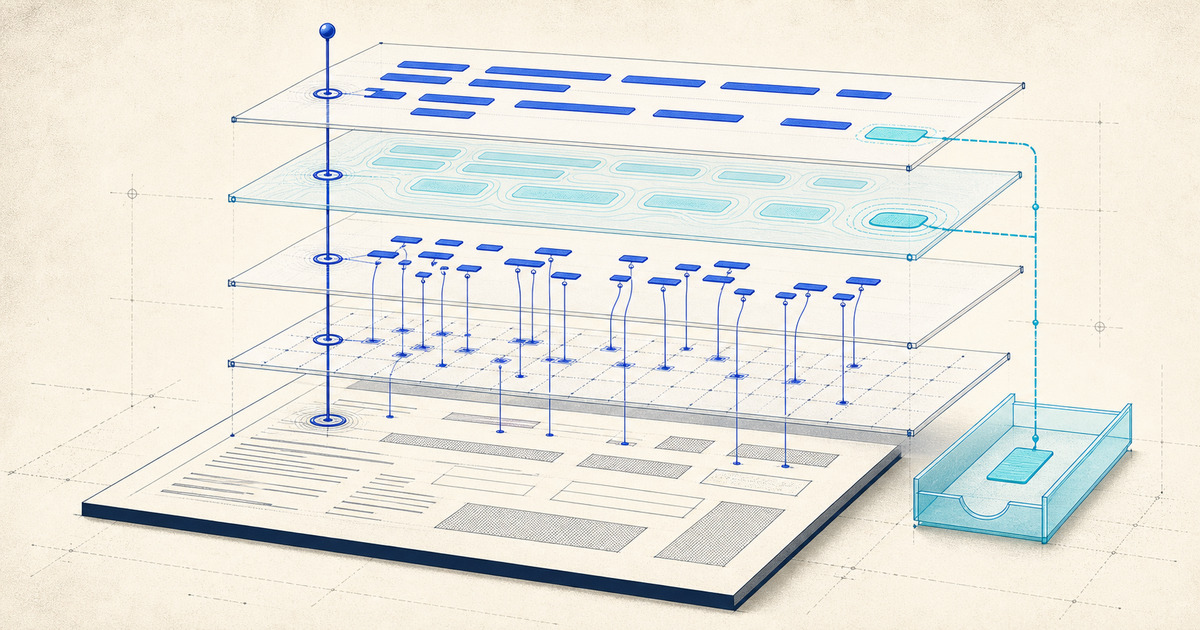
What Makes AI Document Verification Trustworthy Enough for Compliance
AI document verification is easy to demo and hard to defend. This field report covers the architecture that makes automated verification auditable: provenance, confidence routing, and human review where the model should not decide alone.