AI document verification works best when extraction, confidence, review, and auditability are designed as one workflow.
Compliance teams should treat document AI as evidence infrastructure, not just a faster way to copy fields from PDFs.

Solvrz Team
Solvrz
Challenge
Compliance and verification teams need structured evidence, but business documents are inconsistent, incomplete, and too risky for blind automation.
Approach
Design document AI around intake, extraction, validation, confidence scoring, human review, and audit trails.
Outcome Focus
Create a document verification workflow that makes evidence review faster, clearer, and more accountable without hiding risk.

AI document verification is not just document extraction with a better label. For compliance teams, the value comes from turning messy evidence into a reviewable, auditable workflow.
Solvrz designs AI document verification workflows for organisations where documents, credentials, records, or compliance evidence need structured review. The goal is to support accountable decisions, not quietly replace judgement with an opaque automation layer.
Challenge: Documents Carry Risk As Well As Data
Compliance documents rarely arrive in a perfect format. They may be PDFs, scans, forms, certificates, spreadsheets, screenshots, or email attachments. Some fields are missing. Some documents are outdated. Some evidence needs to be compared against a policy, system record, issuer, or approval rule.
Basic automation can move the file or extract a field. That is useful, but it does not solve the verification problem. A verification workflow needs to answer harder questions:
- Is this the right document type?
- Which evidence matters for the decision?
- What was extracted with high confidence?
- What needs human review?
- Which rules were checked?
- Who approved or rejected the case?
- What audit trail remains?
Without those answers, document AI can create more review work instead of less.
Approach: Build The Verification Workflow Around Evidence
A practical AI document verification workflow has six layers.
1. Intake
Define the document sources, upload paths, accepted formats, metadata, and ownership. Intake should record where the document came from and which workflow it belongs to.
2. Classification
Classify the document type before extraction. A passport, training certificate, supplier document, compliance policy, and product evidence file all need different extraction targets and review rules.
3. Extraction
Extract the fields that matter for the decision. This might include names, dates, licence numbers, issuer details, product identifiers, expiry dates, compliance statements, or supporting evidence.
4. Validation
Use deterministic rules where possible. For example, dates can be checked, required fields can be flagged, formats can be validated, and document type mismatches can trigger review.
5. Human Review
Reviewers should see the source document, extracted fields, confidence flags, rule failures, and suggested next action. They should be able to approve, edit, reject, request more evidence, or escalate.
6. Audit Trail
Record what happened: source, extracted values, reviewer action, timestamp, decision, and exception reason. The audit trail is what makes document AI useful for compliance and digital trust.
Outcome: Faster Review With Visible Accountability
The outcome of AI-powered document verification should be a clearer evidence workflow. Teams should know which cases are ready, which are uncertain, and which need manual attention.
Useful measurement signals include:
- Time from document intake to first review.
- Percentage of documents classified correctly.
- Reviewer correction rate.
- Low-confidence exception rate.
- Missing evidence rate.
- Number of cases completed without additional manual chasing.
These metrics do not need to be perfect in the first release. They need to be visible enough to guide the next build decision.
Evidence: Verification Workflow Matrix
| Workflow layer | AI role | Human or deterministic control |
|---|---|---|
| Intake | Identify likely document context | Required fields and accepted formats |
| Classification | Suggest document type | Reviewer override and exception state |
| Extraction | Pull evidence fields | Field validation and source preview |
| Validation | Flag possible mismatches | Rules, thresholds, and policy checks |
| Review | Summarise case state | Approval, rejection, escalation |
| Audit | Generate structured record | Immutable decision history where required |
The key principle is simple: use AI where documents are variable, and use rules or human review where accountability matters.
Related
For automation projects that start from broader operational workflows, see AI automation sprint for enterprise workflows. For trust and verification systems beyond documents, see digital trust services.
{
  "@type": "FAQPage",
  "mainEntity": [
    {
      "@type": "Question",
      "name": "What is AI document verification?",
      "acceptedAnswer": {
        "@type": "Answer",
        "text": "AI document verification uses AI to classify documents, extract evidence, flag uncertainty, and route cases for review. It is most useful when combined with validation rules, human review, and audit trails."
      }
    },
    {
      "@type": "Question",
      "name": "Can document AI support compliance workflows?",
      "acceptedAnswer": {
        "@type": "Answer",
        "text": "Yes, document AI can support compliance workflows when it is designed around evidence, review, confidence scoring, and auditability. It should not be treated as fully autonomous where decisions carry legal, financial, or operational risk."
      }
    },
    {
      "@type": "Question",
      "name": "How is document verification AI different from OCR?",
      "acceptedAnswer": {
        "@type": "Answer",
        "text": "OCR reads text from documents. Document verification AI classifies the document, extracts decision-relevant evidence, checks uncertainty, and supports a review workflow around that evidence."
      }
    }
  ]
}
Evidence Snapshot
- Verification workflows need reviewer-visible source evidence, confidence flags, and exception handling.
- Document AI should distinguish deterministic validation from AI-assisted classification or extraction.
- Audit trails help compliance teams understand what was extracted, what was reviewed, and what decision followed.
Connected Reading
Follow the related product path
Service page
Blockchain development
Design and build blockchain systems, smart contracts, and digital trust platforms for verifiable workflows.
Solution page
Document AI solution
Explore document intelligence for compliance, verification, evidence, and digital trust workflows.
Engagement path
Build capabilities
Compare the discovery, engineering, AI, digital trust, launch, and governance lanes.
Keep reading

What Makes AI Document Verification Trustworthy Enough for Compliance
AI document verification is easy to demo and hard to defend. This field report covers the architecture that makes automated verification auditable: provenance, confidence routing, and human review where the model should not decide alone.
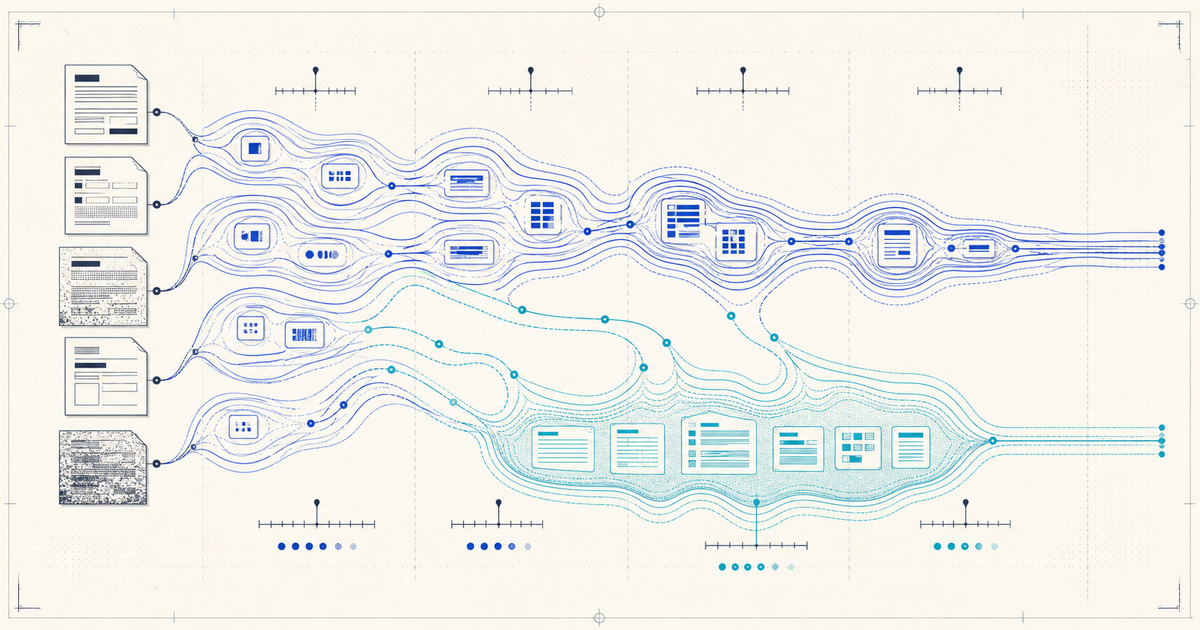
How AI Document Verification Works — And What Actually Drives Accuracy
A plain explainer of how AI document verification works end to end — classification, extraction, validation, confidence scoring, and review — and the concrete factors that actually drive accuracy in automated document checking.