AI can read a document in seconds. Proving the decision was right is the hard part.
Extraction accuracy is table stakes. Compliance-grade document verification needs provenance, confidence thresholds, and a human path for every decision the model is not sure about.
Challenge
Automated document verification must be fast enough to scale and auditable enough to survive compliance review.
Approach
Separate extraction from decision-making, attach provenance to every field, and route low-confidence cases to human reviewers instead of letting the model decide alone.
Outcome Focus
Verification products that clear more documents automatically while keeping every decision explainable and reviewable.

An AI model can read a passport, an invoice, or a diploma in under a second and tell you what it says. That demo is easy. The part that decides whether a verification product survives contact with a compliance team is different: can you prove why the system accepted or rejected a specific document, months later, to someone who was not in the room?
That question is why most "AI document verification" projects stall between a convincing prototype and something a regulated business will actually run.
Challenge: Speed and auditability pull in opposite directions
The appeal of automated document verification is throughput. A team drowning in manual checks wants a system that clears the routine cases so people can focus on the exceptions.
But the moment verification touches onboarding, credentials, or payments, it inherits an audit requirement. A rejected applicant can dispute the decision. A regulator can ask for the basis of an approval. A model that outputs a confident yes or no, with no trace of how it got there, cannot answer either. Speed without provenance is a liability, not a feature.
Approach: Separate reading from deciding
The design principle we keep returning to is that extraction and decision are two different jobs and should not be collapsed into one model call.
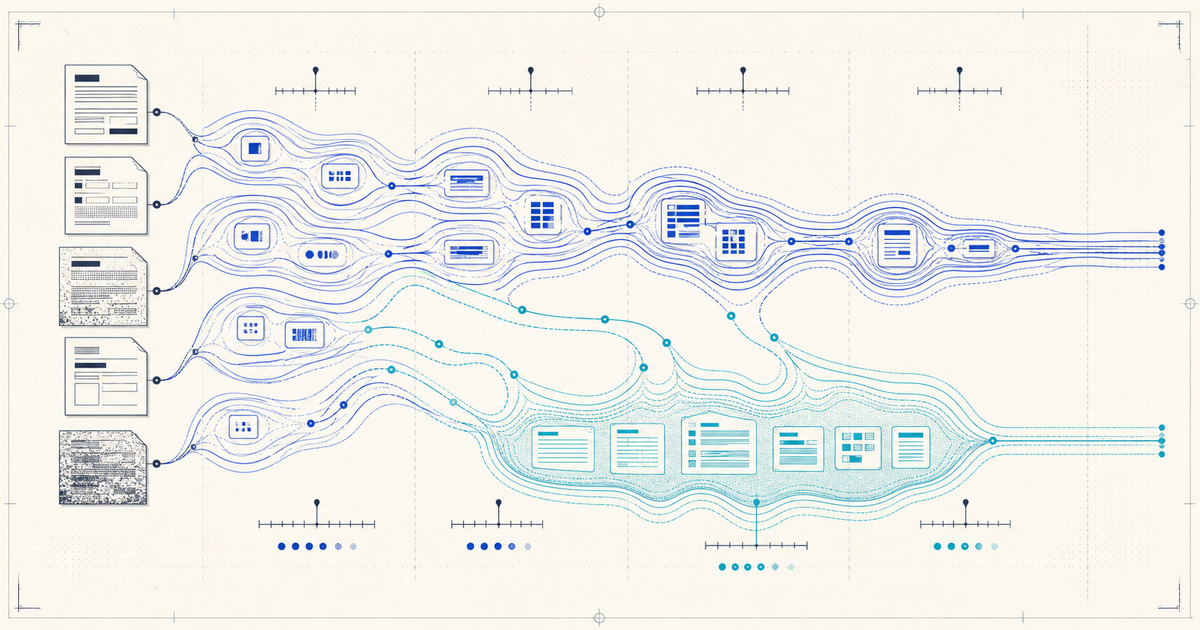
Extraction reads the document and pulls out fields — name, date, document number, issuing authority. Each field is stored with two things attached: a reference to where in the document it came from, and a confidence score. That provenance is what lets a reviewer later trace any value back to the exact region of the page it was read from.
The decision layer then applies rules to those fields. Does the expiry date pass? Does the issuing authority match an accepted list? Rules are deterministic and explainable in a way a raw model output is not, and they are the part a compliance reviewer can actually read.
Desire: Let confidence decide who decides
The hinge between automation and trust is a confidence threshold. High-confidence extractions on documents that satisfy the rules can clear automatically. Anything below the threshold — a blurry scan, an unfamiliar template, a field the model hedged on — routes to a human reviewer instead of being forced into an automated pass or fail.
This is the same handoff logic that serious automation products need everywhere: the system should know the boundary of what it can decide alone and hand back control at that boundary rather than guessing. Over time, reviewer corrections tighten that boundary, so the share of documents that clear automatically rises without loosening the standard.
For teams evaluating a build, this reframes the brief. The question is not "how accurate is the model?" It is "what happens to the documents the model is not sure about, and can we defend every automated decision it does make?"
Action: Build the audit trail first
If you are scoping AI document verification, start with the record you will need to defend a decision, then build the model around it — not the other way around. Provenance, confidence scores, and a human review path are not features you add at the end for compliance. They are the architecture.
That is the same thesis behind our digital-trust work: verification is only valuable when the people relying on it can check it. See how the approach fits into our document AI solution and our broader applied research.
Evidence Snapshot
- Every extracted field carries a source reference and a confidence score, so a reviewer can trace any decision back to the pixels it came from.
- Confidence thresholds route ambiguous documents to human review rather than forcing an automated pass or fail.
- Verification logic sits alongside existing systems through connectors, so teams adopt it without replacing their document pipeline.
Connected Reading
Follow the related product path
Service page
Blockchain development
Design and build blockchain systems, smart contracts, and digital trust platforms for verifiable workflows.
Solution page
Document AI solution
Explore document intelligence for compliance, verification, evidence, and digital trust workflows.
Engagement path
Build capabilities
Compare the discovery, engineering, AI, digital trust, launch, and governance lanes.
Keep reading

AI Document Verification: A Practical Workflow For Compliance Teams
A practical AI document verification workflow for compliance teams: intake, extraction, validation, human review, audit trail, and improvement loop.
How AI Document Verification Works — And What Actually Drives Accuracy
A plain explainer of how AI document verification works end to end — classification, extraction, validation, confidence scoring, and review — and the concrete factors that actually drive accuracy in automated document checking.