Remote venture studios do not win by being remote. They win by being explicit.
A distributed venture studio needs written briefs, durable decision records, and weekly product increments so product judgment does not depend on who happened to be in the room.
Challenge
How do you maintain product and venture-building quality across distributed teams?
Approach
Run written-first venture briefs, asynchronous collaboration defaults, and weekly production increments.
Outcome Focus
Cleaner decision traceability and stronger delivery consistency across in-house ventures and partner programs.
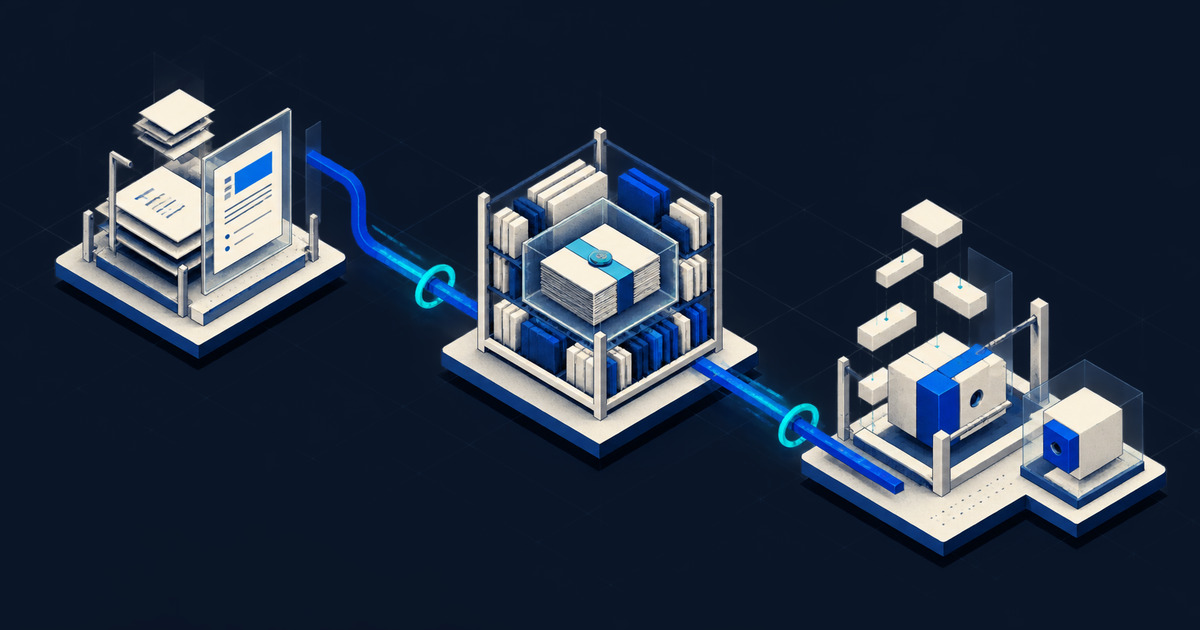
Solvrz operates as a distributed venture studio. We made that choice deliberately, not because remote work is fashionable, but because deep-tech venture building requires the right research, design, and engineering specialists to assemble around the problem rather than around a single office.
Attention: Proximity Can Hide Weak Process
In a co-located office, alignment can appear to happen through osmosis: hallway conversations, overheard discussions, whiteboard sessions. Distributed venture teams cannot rely on those shortcuts. Alignment has to be engineered.
At Solvrz, every venture track or partner program starts with a written brief. Not a deck, not a chat message -- a structured document that outlines the thesis, users, constraints, success criteria, technical risks, and open questions. This brief becomes the source of truth the team references throughout validation and build.
Interest: Written Work Creates Decision Memory
We default to asynchronous communication. Meetings exist, but they serve a specific purpose: decisions that require real-time debate. Everything else -- status updates, code reviews, design feedback -- flows through written channels with clear expectations on response time.
This approach has a compounding benefit: it produces a searchable archive of every decision and its rationale. New team members can onboard by reading, not by asking.
Desire: Weekly Increments Keep the Thesis Honest
Distributed teams risk drifting without regular checkpoints. We ship working increments weekly. Not theatre, not speculative mockups -- usable product increments that test the venture thesis, reveal constraints, and give stakeholders something concrete to evaluate.
That cadence matters for in-house ventures and partner innovation programs. A venture brief is only useful if the build rhythm keeps converting assumptions into evidence.
Action: Make the Operating Model Visible
Remote-first is not the point. The operating model is the point. Written briefs, durable decision records, and weekly build increments give Solvrz a repeatable way to move from thesis to validation to launch without depending on proximity as a substitute for clarity.
If a team wants the benefits of distributed execution, it should design the decision system first. The tooling comes second.
Evidence Snapshot
- Every venture or partner program starts from a written brief that defines constraints, assumptions, and success criteria.
- The team ships production-ready increments weekly to keep feedback loops short.
- Operational decisions are archived in written channels for asynchronous onboarding.
Connected Reading
Follow the related product path
Keep reading
Why Hybrid AI Belongs in Venture-Grade Automation Products
Rule-based systems are brittle. Pure AI is unpredictable. Venture-grade automation needs a hybrid architecture — adaptive, auditable, and usable by operators.
Credential Verification as a Digital Trust Venture
Credential verification is a digital trust problem. On-chain proofs and issuer workflows can make credential verification faster and more reliable.