Credential verification is not a document problem. It is a trust infrastructure problem.
The useful product opportunity is not putting certificates on-chain for novelty. It is designing issuer workflows, proof layers, and verifier experiences that make trust faster to check.
Challenge
Credential verification is fragmented, slow, and vulnerable to forgery.
Approach
Use on-chain credential proofs with an issuer workflow and one-click external verification.
Outcome Focus
Explore a digital trust venture that can reduce verification friction while improving auditability.
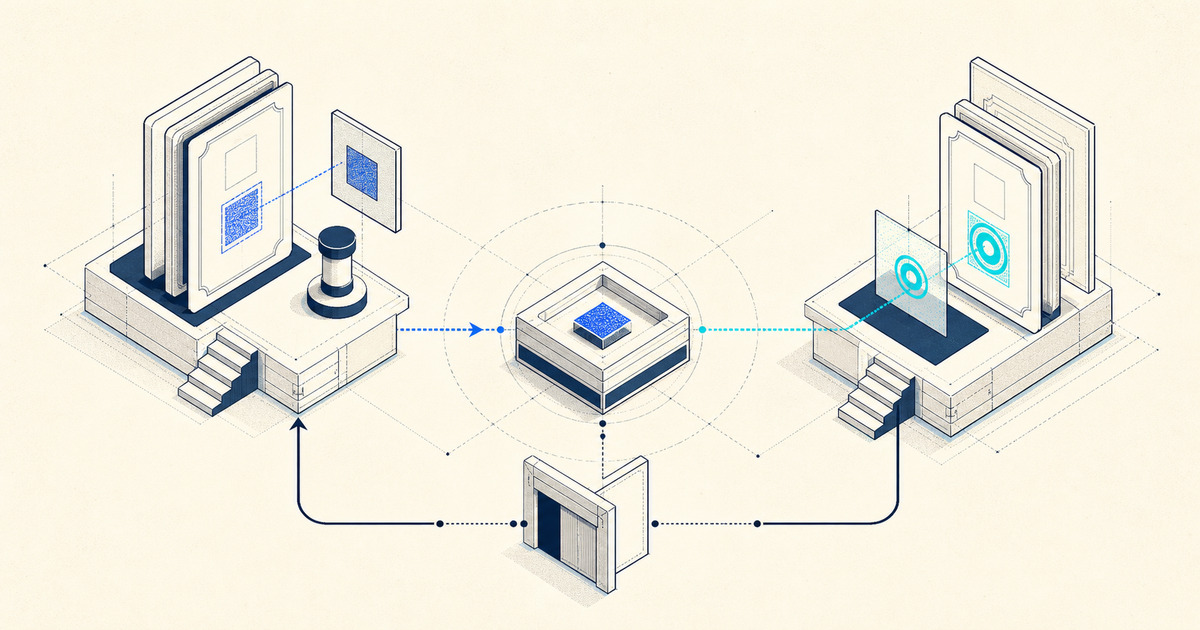
Every year, millions of academic and professional credentials are issued on paper or as static PDFs. Verifying a single record can take days, involve multiple emails or phone calls, and still leave room for fraud. The system was designed for a world that moved slowly. That world no longer exists.
Attention: The Trust Gap
Employers, universities, and regulatory bodies all need to verify credentials, but none of them share a common verification layer. Each institution maintains its own records, formats, and processes. This fragmentation creates a trust gap that bad actors exploit through forged documents and diploma mills.
Interest: The Venture Thesis
Our internal digital-trust research explores whether institutions, employers, and auditors can share a verification layer without relying on slow manual checks. The thesis is simple: credential proof should be durable, portable, and easy to verify.
Blockchain can provide a shared record where a credential is issued once and checked many times. But the product challenge is not just the chain. The real work is issuer onboarding, metadata quality, verification UX, permissioning, and stakeholder trust.
Desire: Why Low-Energy Infrastructure Matters
Early blockchain networks carried a heavy environmental cost. A serious credential product cannot ask institutions to trade document trust for energy waste. Our research therefore prioritises proof-of-stake infrastructure because sustainability is a product constraint, not a marketing flourish.
How the Product Track Works
- Issuance -- An institution creates a credential record with recipient, qualification, date, and issuer metadata.
- Proof -- A tamper-evident proof is attached to the credential so external parties can check authenticity.
- Verification -- An employer, auditor, or institution verifies the credential through a shared record instead of a manual back-channel process.
Action: Build the Workflow, Not Just the Proof
The same trust layer can extend to professional licences, training completions, and micro-credentials. The broader research question is larger: where else does society still depend on slow document trust when a verifiable product layer would be faster and safer?
The practical starting point is the issuer workflow. If institutions cannot create, manage, revoke, and explain credentials clearly, the verification layer will not earn trust no matter how elegant the proof design becomes.
Evidence Snapshot
- The venture model uses proof-of-stake infrastructure to avoid high proof-of-work energy overhead.
- Verification can be completed through a shared credential record instead of manual institution-to-institution calls.
- The same architecture extends to licenses, training records, and micro-credentials.
Connected Reading
Follow the related product path
Keep reading
Why Hybrid AI Belongs in Venture-Grade Automation Products
Rule-based systems are brittle. Pure AI is unpredictable. Venture-grade automation needs a hybrid architecture — adaptive, auditable, and usable by operators.
Building a Remote-First Venture Studio Operating Model
Solvrz uses written venture briefs, async decision records, and weekly build increments to keep distributed product work disciplined without a shared office.