Ventures that ship AI without owning the underlying research end up dependent on whatever platforms decide next.
Solvrz Labs is the internal research engine that runs ahead of delivery — testing AI orchestration, compliance automation, and agent deployment constraints before they appear in a client venture.

Solvrz Team
Solvrz
Challenge
Venture studios that deliver AI products without internal research capacity end up purchasing capability from platforms, which creates dependency, limits differentiation, and slows the feedback loop between deployment learning and product direction.
Approach
Solvrz Labs operates as a semi-independent research engine running ahead of the Studio — building and stress-testing AI orchestration frameworks, compliance engines, and agent infrastructure before they are needed in a live venture or client programme.
Outcome Focus
Studio ventures ship with pre-validated technology bets. Research learning from Labs flows back into delivery, reducing risk at the architecture decision stage and improving governance posture from day one.
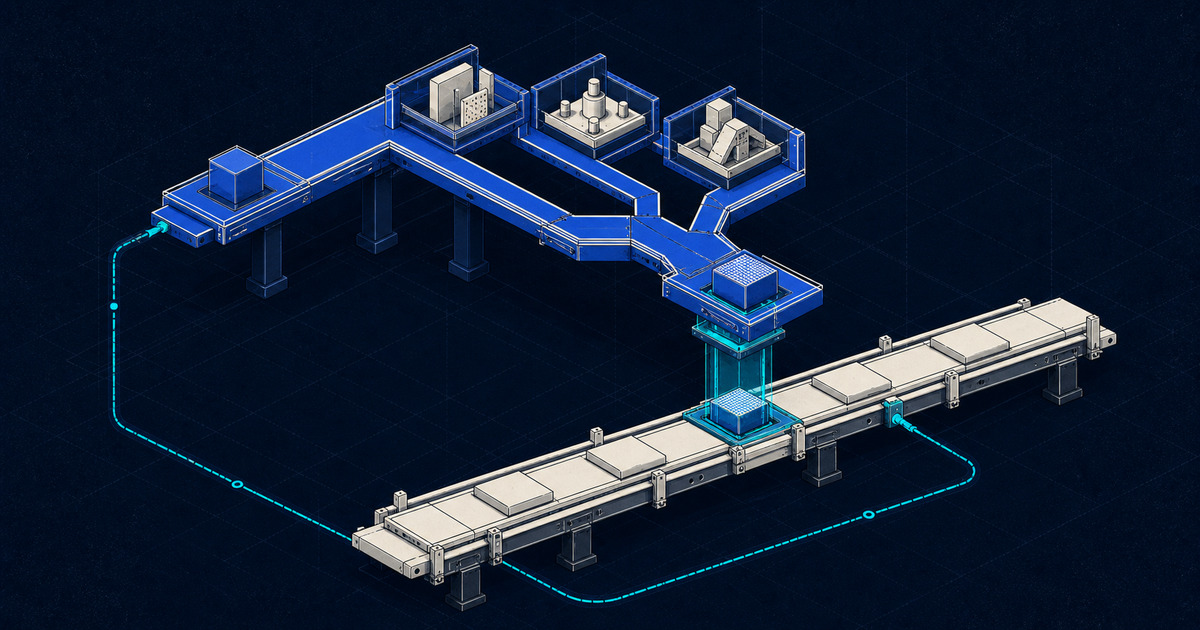
Most AI ventures borrow their technology from someone else's research.
They adopt a platform, connect an API, configure a workflow, and ship. That is a reasonable approach when the platform solves the problem. But it creates a structural dependency: the venture's roadmap is bounded by what the platform decides to expose, prioritise, or charge for next.
Solvrz was designed to operate differently. The Studio builds and backs ventures. Solvrz Labs — the internal research engine running below the Studio — is where the technology bets are tested before they appear in a product.
This is the relationship between the two layers and why it matters for the ventures and programmes the Studio ships.
The Problem With Reactive AI Architecture
Venture studios that move fast into AI delivery often arrive at the same inflection point six to twelve months in: a client programme or in-house product has outgrown the platform it was built on. The vendor's API doesn't support the workflow state required. The evaluation suite was never built. The compliance posture was deferred.
None of these are catastrophic failures. They are the cost of building without a research layer. The fixes are expensive because they happen under production constraints rather than in a dedicated environment where failure is low-cost.
Solvrz Labs exists to absorb that failure cost internally, before it surfaces in a live venture.
What Solvrz Labs Actually Is
Solvrz Labs is not a skunkworks team or a conference keynote concept. It is an operating layer inside the Solvrz structure with three active research domains.
AI Orchestration Framework — a coordination layer for multi-agent AI workflows. This covers LLM routing decisions, tool orchestration patterns, evaluation pipeline architecture, and production reliability controls for AI systems that involve more than a single model call. The orchestration problem is one of the least well-solved areas of applied AI: most implementations are ad hoc until they break under load or require debugging across a chain of model calls with no observability.
Compliance Engine — automated regulatory intelligence and audit trail infrastructure for AI systems operating in regulated environments. The challenge is that compliance requirements are often treated as documentation tasks rather than system design constraints. A compliance engine that is integrated at the architecture stage produces different — and more defensible — outputs than a compliance checklist applied at audit time.
Agent Infrastructure — deployment and runtime layer for autonomous agents. This includes monitoring, safety controls, sandboxing, and lifecycle management for production agent systems. Agent deployment is currently the fastest-moving and least-stable area in applied AI. The infrastructure decisions made now — around isolation, observability, and rollback — will determine which production deployments survive their first six months.
Why Separation Matters
Running Labs as a separate layer from the Studio is a deliberate choice. The Studio's job is to deliver ventures on time with sound architecture and governance. The Labs' job is to stress-test assumptions before they become constraints.
If those two functions share the same timeline and resource pool, the research work gets displaced by delivery pressure every time. What remains is not research — it is documentation of decisions already made.
The separation keeps Labs research ahead of Studio delivery by at least one development cycle. When a venture enters its build phase, the technology questions it will face have already been explored in a lower-stakes context.
What This Produces for Studio Ventures
A venture shipping with Labs-backed technology has a different architecture profile at launch than one built from first principles under deadline.
The AI orchestration layer has been stress-tested against failure modes the team has already mapped. The compliance posture was a design input, not a post-launch retrofit. The agent deployment model has a runtime isolation approach that has been validated against the production constraints the team expects to encounter.
This does not eliminate risk — it relocates it. The risk moves from the production environment, where it is expensive, to the research environment, where it is instructive.
Labs Access and Research Collaboration
Solvrz Labs engages selectively. Infrastructure access and research collaboration discussions are by invitation, because the work in progress is the competitive edge of the ventures the Studio ships.
If you are building in one of the Lab domains — AI orchestration, compliance automation, or agent infrastructure — and you are interested in research exchange or architectural partnership, the right starting point is a direct conversation.
The Lab is not a product. It is the reason the Studio's products are harder to replicate.
Evidence Snapshot
- AI orchestration patterns that have been stress-tested internally require less remediation after deployment than patterns adopted directly from vendor documentation.
- Compliance engine architecture built ahead of a regulated venture reduces rework at audit stage — constraints are treated as design inputs, not post-launch fixes.
- Agent infrastructure pre-validated for safety and runtime isolation changes the risk profile of autonomous AI deployment in production environments.
Connected Reading
Follow the related product path
Keep reading
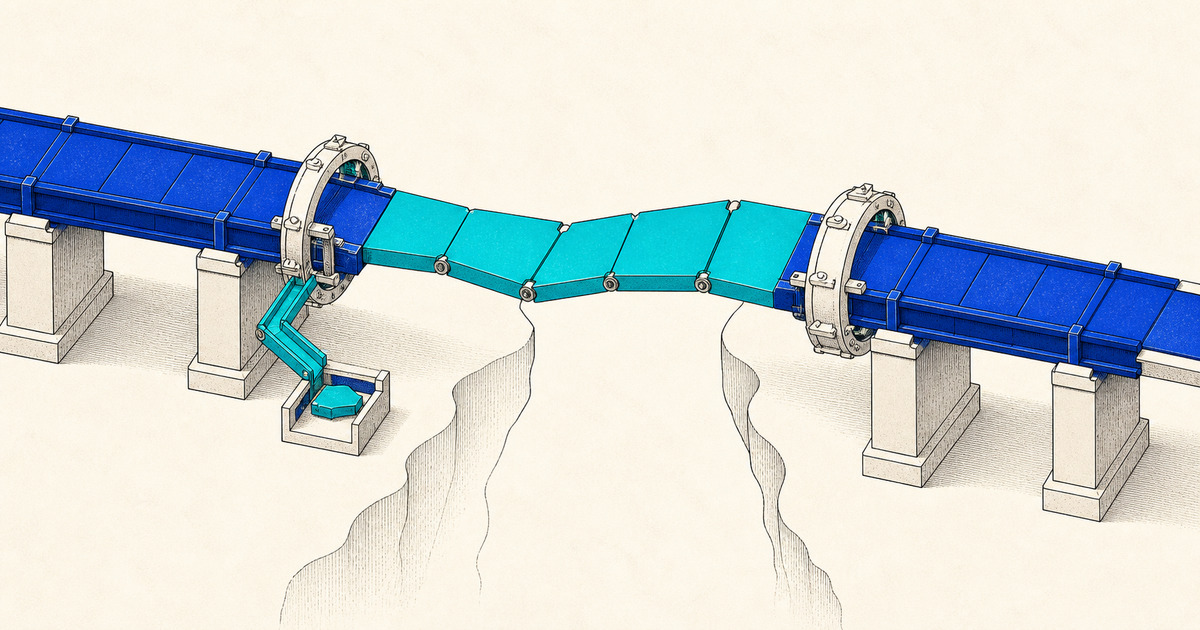
Why Hybrid AI Belongs in Venture-Grade Automation Products
Rule-based systems are brittle. Pure AI is unpredictable. Venture-grade automation needs a hybrid architecture — adaptive, auditable, and usable by operators.
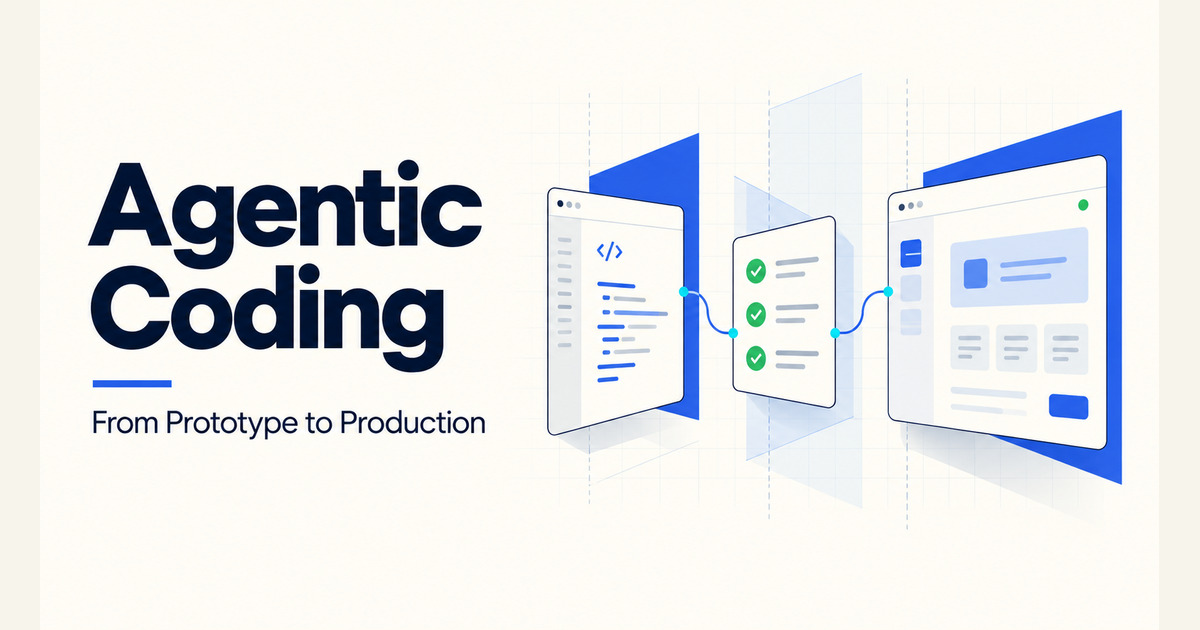
Agentic Coding in 2026: How to Turn an AI Prototype into a Production-Ready Product
Learn how to turn an AI-built prototype into a production-ready product with a practical CTO guide to architecture, testing, security, and launch readiness.